
No products in the cart.
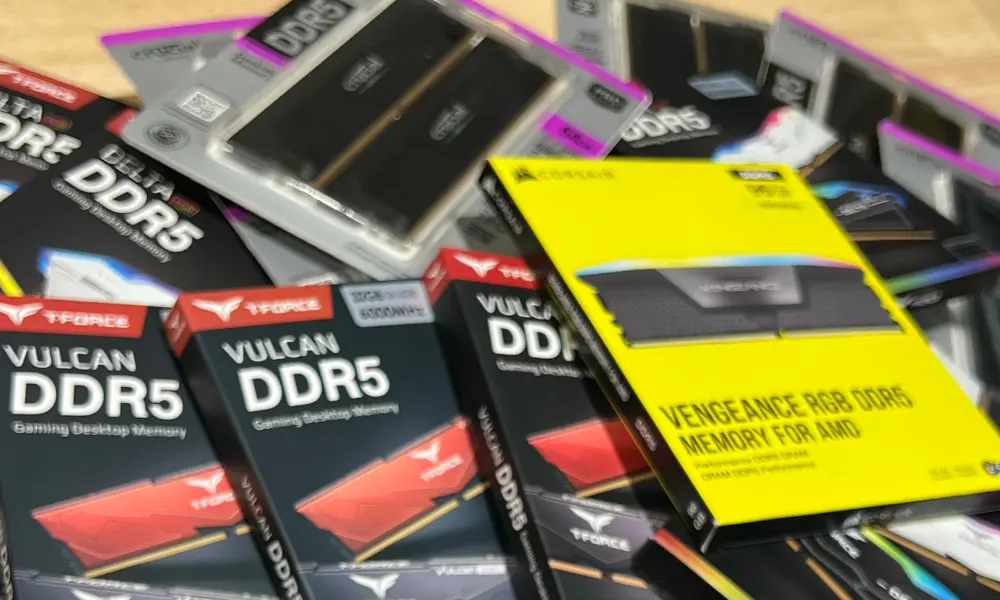
The computer memory market is in for a major shock. Artificial intelligence data centers are absorbing unprecedented quantities of DRAM, NAND and VRAM chips. As a result, prices are rising, inventories are dwindling, and manufacturers are reserving their best production for corporate giants.
Many analysts predict that the situation will continue to worsen, without stabilizing until 2027 or 2028. If you’re planning to upgrade your gaming PC, the bad news is that current prices are likely to be the lowest you’ll see for a long time. The good news is that there’s still time to get a powerful machine before the market squeezes even further.
At NOX Gaming, we can already see it: high-end components are becoming more expensive and harder to come by. In this article, we clearly explain why the situation is what it is, what’s coming, and why now is the perfect time to secure your next gaming PC at the best possible price.
Since the beginning of November 2025, prices for DRAM (the RAM used in PCs) have been rising at a rate rarely seen. Some regular 32GB DDR5 kits have more than tripled in price since the beginning of November.
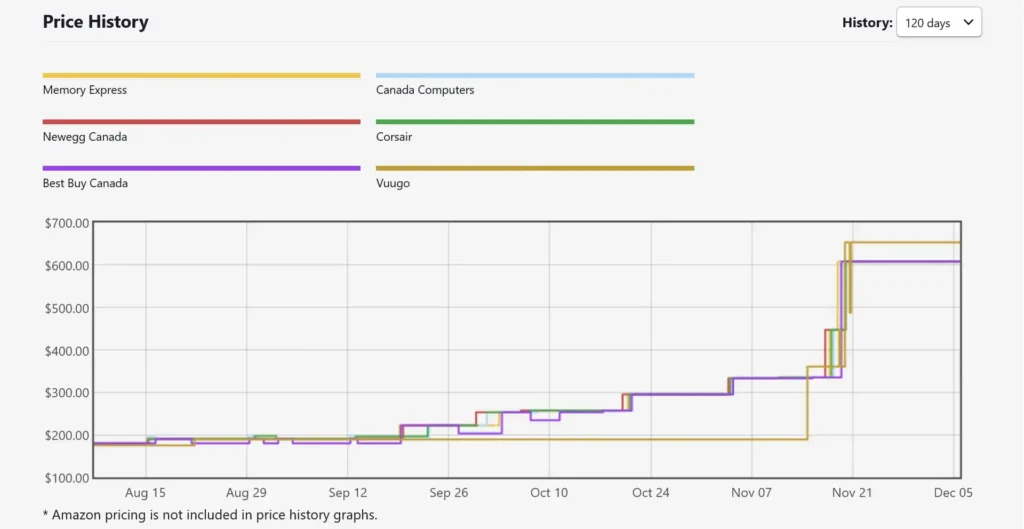
Source: PCPartPicker Canada, Corsair Vengeance RGB 32 GB (2 x 16 GB) DDR5-6000 CL30 Memory, December 05, 2025
This increase is not due to a lack of manufacturing, but to a sudden change in the distribution of supply. The world’s biggest memory buyers are no longer companies that manufacture computers, but AI data centers that buy complete production lines.
RAM is not the only victim: SSD and graphics card manufacturers are also seeing increases of this kind.
Since September, the value of M.2 and 2.5′ SSD modules has more than doubled. In fact, the NAND memory used to manufacture storage modules is also useful for data center start-ups and artificial intelligence companies. The Kingston NV3 module, considered one of the most stable and affordable for most consumers, went from $75.95 CAD to over $150 at some Canadian retailers in less than 60 days.
On the graphics card side, prices haven’t moved much yet, but experts reckon a huge increase is on the cards’ way for January 2026. Indeed, to function, these cards use another type of Random Access Memory : VRAM, which is produced by the same companies as the rest of the products on back-order. What’s more, producing a graphics card requires a lot of components, which are themselves impacted by cost increases and stock-outs. So when memory goes up, so does the cost of manufacturing GPUs. That’s why we’re already seeing AMD adjust its prices, and why several rumors indicate that further rapid increases are on the way, probably in the next few months.
The main cause is the same everywhere: massive demand from AI players.
they absorb
To maximize profits, manufacturers prefer to produce HBM and DRAM for servers rather than DDR5 modules for home PCs. This mechanically reduces supply for the consumer market.
In concrete terms, we can see the effects directly with the Crucial brand, a pioneer in the world of SSD storage and RAM for consumer computers, which has just been dissolved completely by its parent company Micron, which will now focus all its production efforts on chips used for artificial intelligence.
Frandroid explains, for example, that Samsung and SK Hynix no longer deliver 100% of orders: some customers receive as little as 70% of the quantities requested. For Samsung and SK Hynix, who together hold 70% of the global DRAM market, the objective is not to increase immediate production, but to ensure long-term profitability for the company.
they could
Fewer deliveries also means less availability in stores, which pushes prices up even faster. All the more reason for both companies to limit their production for consumers, to create scarcity and increase profits.
As mentioned, the VRAM used in GPUs is also a specialized type of memory. This memory comes from the same manufacturers as conventional DRAM. This means that the pressure exerted by data centers is reflected in the availability of graphics cards.
Since late 2025, the shortage has also affected GDDR and HBM memory, slowing GPU production and prompting manufacturers to favor more expensive cards.
In other words, entry- and mid-range graphics cards could be produced in smaller quantities, or at higher prices, because they are less profitable than models designed for high-performance computing.
All this is made worse by the fact that NVIDIA, responsible for 92% of the graphics card market, will no longer supply the VRAM needed by manufacturers such as Asus, MSI, Gygabyte or Zotac. Being smaller companies than NVIDIA, these manufacturers don’t have the bargaining power to obtain prices as advantageous as those previously obtained by the larger company.
Not having access to such large quantities, and having to pay a higher price, it wouldn’t be surprising if these companies put more effort into higher-performance motherboards, which offer better profit margins per unit.
This means several things:
A link can be made with the GPU crisis of 2018 to 2022, during the cryptocurrency mining wave. The difference this time is that, compared with vague and unstable cryptocurrencies, demand and progress in AI is here to stay.
The shortage affects not only DRAM, but also the NAND memory used in SSDs. The major flash storage players find themselves in the same situation: they have to decide whether to sell chips to consumers or reserve them for data centers.
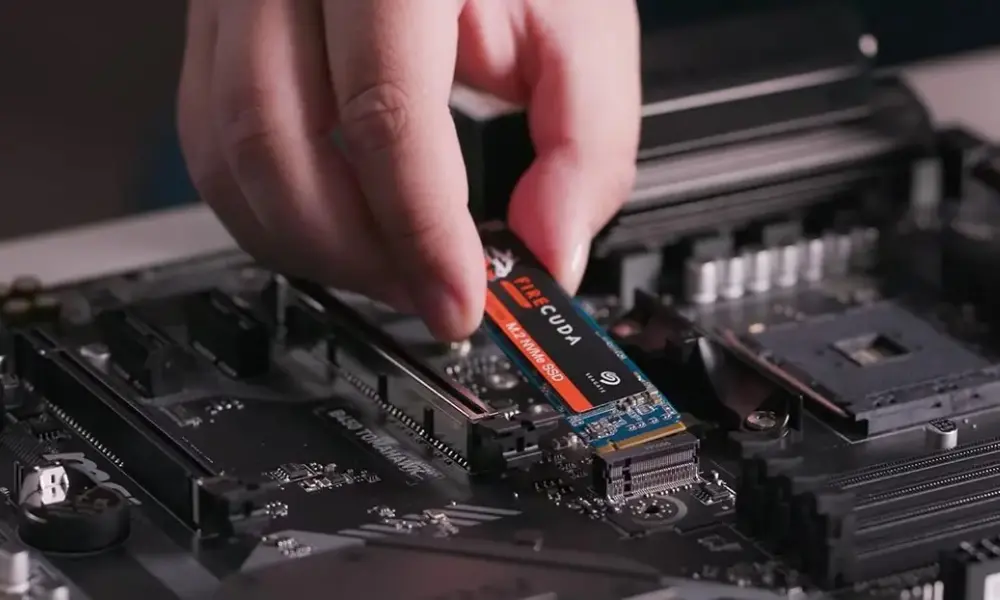
Tom’s Hardware reports that the price of NAND wafers (the foundation for the manufacture of microchips) has risen by over 60% in November alone, a very rapid increase that promises to have a direct impact on SSD prices.
Also according to Tom’s Hardware, Phison ‘s CEO claims that all their NAND production for 2026 has already been sold to data centers, leaving very little stock for the consumer market.
This means that SSDs are also likely to rise in price throughout 2026 and 2027, without pause. With the price rise already underway, doubling the price of SSDs from October to December 2025, it’s hard to predict what price will be reached in the years to come.
Manufacturers are unanimous: this is not a crisis that can be resolved in a few months. Reuters reports that industrial consumption of DRAM and NAND will continue to outstrip production until at least 2027. This imbalance will continue to create a supply/demand imbalance, and will most likely cause several major price hikes for the three main components of gaming computers in the coming years.
Frandroid quotes analysts who estimate that the situation could very well last until 2028, as manufacturers are currently refusing to increase capacity, for fear of overproducing when the “AI bubble” bursts. They want to keep their inventories equal to or below demand, to maintain more profitable price control.
Micron has even closed its Crucial division, preferring to redirect memory to AI customers rather than consumers.
The decision by Micron, Crucial’s parent company, to dissolve and close its RAM division for consumers proves that companies prefer to serve large corporations, where demand and budgets are extremely high.
Even if, by chance, companies decide to invest in new factories, it will take years to build memory production lines sufficient to meet current and future demand. There will be no quick return to regular prices for GPUs, SSDs and RAM.
What’s expensive today could be much more expensive tomorrow. The trends show no sign of slowing down for 2026. Although the vast majority of system integrators like NOX Gaming have already had to increase their prices to reflect the sudden surge in the market, prices are only set to rise over the next two years. Stocks of RAM and SSDs already acquired before the latest peaks allow us to sell our PCs below current component prices in some cases.
A component available today may not be available next week. This is no exaggeration: manufacturers are already under-delivering. Even with our contacts at several component distributors, it’s increasingly difficult to find more unique parts, such as white and RGB PC components.
At NOX Gaming, we can stock key components and ensure you have a functional machine, ready for years of performance. Buying parts yourself can be complicated.
For example, all NOX Gaming PCs, including the Flare, Quasar and NOVA, as well as all PCs from the configurator, include a 3-year parts and labor warranty. If a part, such as the graphics card, should fail in two years’ time, at the peak of component prices, we’ll be able to repair or replace it for you, free of charge.
Today’s market is not just unstable, it’s changing. Data centers and AI absorb most of the world’s memory production. DRAM, NAND, VRAM – everything is affected. Prices are rising, stocks are tightening, and experts see no serious improvement before 2027 or 2028.
If you wait to buy a gaming PC, you run the risk of paying more, having less choice, or having to accept a weakened configuration.
If you want a stable, high-performance, long-lasting machine, the best time is now, and that’s exactly what NOX Gaming can offer you: a reliable PC, assembled with care, with parts you may not see again at these prices for a long time, plus a 3-year parts and labor warranty included.


